
Bereichsnavigation
Equality and equal opportunities
Equality and equal opportunity are essential prerequisites for an open, democratic, and sustainable cultural institution. As Germany’s largest cultural network, comprising museums, libraries, archives, and research institutes, we view diversity not only as a social reality but also as a strength. Diverse perspectives, experiences, and ways of life enrich our work, our collections, and our offerings to the public.
Gender Equality
Equality between women and men is a central goal of a fair, modern and effective institution. Despite significant progress, structural inequalities persist, particularly to the disadvantage of women, for example in career advancement, appointments to leadership positions, pay equity and balancing work with family and caring responsibilities. This Gender Equality Plan addresses these issues, aiming to systematically eliminate the disadvantages faced by women and ensure equal opportunities at every stage of their careers.
The disadvantages women face are not determined by gender alone. An intersectional approach to gender equality recognises that gender-based inequalities can intersect with other grounds of discrimination, such as age, religion, disability, ethnic origin, socioeconomic circumstances or family responsibilities. These intersections can compound existing disadvantages and call for tailored measures that respond to the needs of different groups. Effective gender equality policy must therefore focus both on advancing women and on recognising the diversity of their lives and working circumstances.
The legal framework for gender equality is provided in particular by the Federal Act on Gender Equality (Bundesgleichstellungsgesetz, BGleiG) and the General Act on Equal Treatment (Allgemeines Gleichbehandlungsgesetz, AGG). The BGleiG expressly requires public sector employers to actively promote equality between women and men, eliminate the underrepresentation of women – particularly in leadership and decision-making positions – and address structural disadvantages. Complementing this, the AGG provides comprehensive protection against discrimination and underlines the public sector’s obligation to ensure working conditions free from discrimination.
Equal Opportunities
Enabling equal participation means removing existing disadvantages and providing everyone with fair access and opportunities for development. Equal opportunities do not mean treating everyone identically, but taking different starting points into account to enable meaningful participation. This applies equally to our staff, users and visitors. A working environment free from discrimination provides the essential foundation for a culture of tolerance and mutual respect and encourages motivation, creativity and collaboration. At the same time, inclusive and diverse programmes and services with minimal barriers to access should help everyone feel welcome and experience culture as a shared space.
Our institution is expressly committed to the aims of the General Act on Equal Treatment (AGG). Discrimination on the grounds of sex, gender identity, ethnic origin, racialisation, religion or belief, disability, age or sexual identity is not tolerated. We adopt an intersectional approach, recognising that people can experience several forms of discrimination simultaneously. We therefore take decisive and preventive action against all forms of discrimination, exclusion or harassment – within our structures, across the institution and in our everyday interactions.
For us, gender equality and diversity are integral to our identity as a public cultural institution. They strengthen our responsibility to society, promote quality and innovation, and ensure that our work remains relevant to everyone in the long term.
Framework conditions for the implementation of gender equality and equal opportunity
Federal civil service regulations and the provisions of the General Equal Treatment Act (AGG) and the Federal Equality Act (BGleiG) form the legal framework for equality and equal opportunity within the Foundation.
The Foundation’s Equality Plan serves as the concrete basis for its work on equality and equal opportunity. In accordance with the requirements of the Federal Equality Act, the Foundation has also developed a Gender Equality Plan, which is regularly updated and revised. As a member of the German Research Foundation (DFG), the “Research-Oriented Equality Standards” are binding for the Foundation. They are intended to ensure equal opportunities for women to pursue careers at universities and other research institutions.
Since 2023, the Foundation has been certified as an employer by the “berufundfamilie” audit, a seal of quality for the sustainable development of a strategic human resources policy that takes family and life stages into account, as well as family-friendly working conditions.
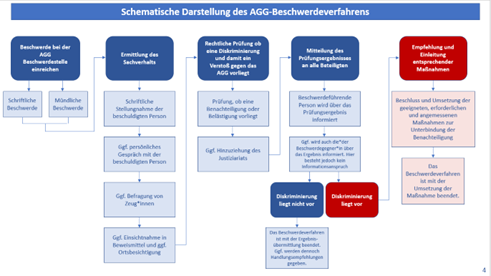
The official complaints office under the General Equal Treatment Act (AGG), known as the AGG Complaints Office, is an instrument for fulfilling the duty of care under civil service and labor law with regard to protecting all employees from discrimination within the framework of the employment relationship.
A complaint procedure with the AGG Complaints Office is possible in cases of discrimination based on:
- Ethnic origin, racist attributions
- Gender identity
- Age
- Religion / Beliefs
- Sexual identity
- Disability
- Sexual harassment in the workplace
The Work of the Equal Opportunity Officer
Interview: An insight into the SPK’s work on gender equality (22 November 2023)
General remit as Equality Officer
Together with her team, the Equality Officer supports and advises staff, managers and senior management on all matters relating to equality and equal opportunities. She provides impetus, facilitates networking and promotes open, tolerant discussion on social issues relevant to equality and diversity. At the same time, she develops measures designed to enable all staff to participate on an equal footing in working life at the SPK.
The Equality Officer operates both internally and externally. For staff, she offers advice in cases of:
- Challenges and conflicts relating to the work-life balance (including work and family/care responsibilities)
- Conflicts with colleagues and/or line managers
- sexual harassment
- discrimination
and provides support with:
- Interest in peer support, discussion and advice for female managers as well as for female employees without managerial responsibilities
- Interest in topic-specific group counselling sessions/workshops for teams, departments and divisions
- Interest in advice on women’s health in the workplace
- Interest in support with internal job applications for career development
- Interest in support for particularly stressful personal situations in the workplace
She also runs network groups on the following topics:
- Migrant women*
- Family carers
- Single and separated parents
- Queer parents
and provides staff with comprehensive information material on the internal communication platform.
Measures to Promote Gender Equality and Equal Opportunity
berufundfamilie Audit
As part of the certification process, specific target agreements are established along with a three-year action plan. Learn more about balancing work, family, and life.
Remote Work and Flexible Hours
All employees have the option to work remotely. A corresponding service agreement governing the framework conditions was adopted in January 2022. The SPK also does not enforce fixed core working hours. This allows for largely flexible work schedules to be implemented—provided that job responsibilities permit it.
Parental Leave and Caregiving Leave
The Foundation supports and advises (expectant) parents or employees with caregiving responsibilities to find good and suitable solutions on a case-by-case basis.
Counseling Services
Employees have access to counseling and support services to help them manage professional and family challenges. These include the comprehensive services provided by the psychologists of the Occupational Health Service as well as an extensive range of coaching options.
Childcare
As part of a partnership with KidsMobil, the SPK offers flexible emergency childcare. This service can be used whenever regular childcare is unavailable or work commitments fall outside regular childcare hours (in the evening or on weekends). Further information can be found in the flyer, which is available for download here.
In addition, the Foundation provides its employees with up to 25 daycare spots as needed through a partnership with FRÖBEL Bildung und Erziehung GmbH.
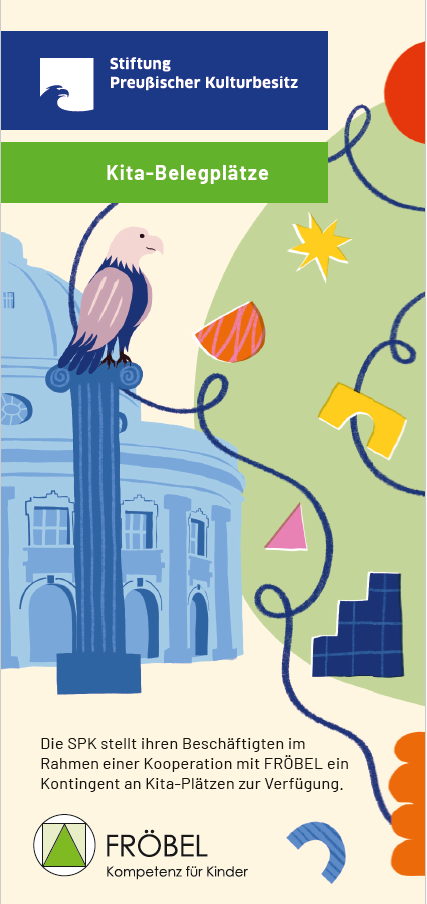
Further information about the partnership and the daycare spots is available for download in the Flyer zum Download here.
As public servants, the Foundation’s employees are eligible for discounted membership in Sozialwerk.Bund. Sozialwerk.Bund offers a wide variety of services (e.g., for vacation planning).
Sabbatical
The Foundation offers the option of a sabbatical as part of a service agreement. A sabbatical is the opportunity to take an extended career break while continuing to receive pay. This is achieved through part-time work under a special work schedule.