

Bereichsnavigation
Sustainability
In view of global challenges such as the climate crisis and resource scarcity, the Stiftung Preußischer Kulturbesitz (Prussian Cultural Heritage Foundation), as Germany's largest cultural foundation, has a special responsibility for a sustainable future. As a cultural institution with state museums, research institutions, libraries, and archives, the SPK plays a central role in social change.

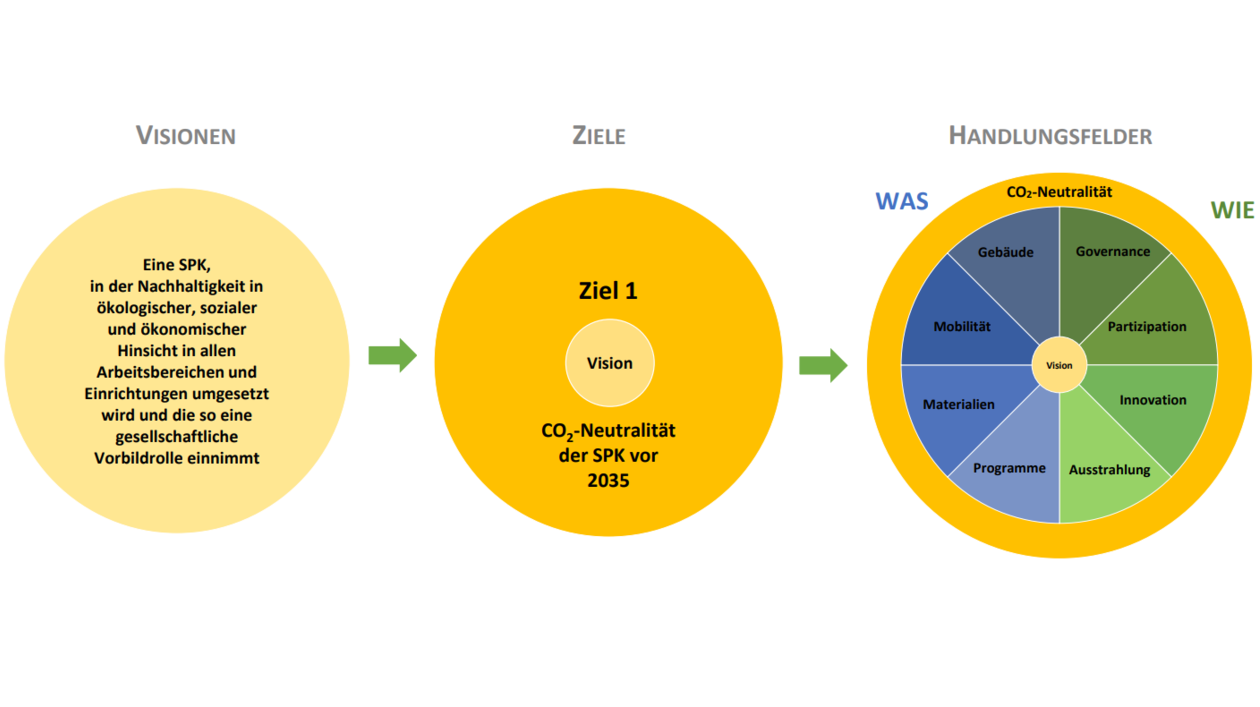
The SPK has set itself the goal of achieving climate neutrality by 2035. Social, ecological and economic sustainability is to be implemented in all areas of work. The sustainability officer and her team manage and support the implementation process.
For the SPK, sustainability is a collective learning process that encompasses ecological, social, and cultural dimensions and involves the foundation at all levels. On these pages, you can learn more about our goals on the path to carbon neutrality and the specific measures we are taking to make a sustainable contribution.
1. Strategic orientation
Goals & plans for CO₂ neutrality
The foundation's long-term goal is to become CO₂ neutral by 2035. In order to gradually reduce its ecological footprint, areas for action have been defined, environmental aspects have been assessed according to their significance, and concrete measures have been defined, including the reduction of energy consumption.
2. Guard rails
Checklists and environmental policy
Sustainability is pursued as an overarching principle at the foundation and is to be anchored in all areas of work. Binding guidelines and practical checklists have been drawn up to support employees. These help to systematically incorporate sustainability aspects into decision-making processes. The foundation's environmental policy serves as a guiding principle and provides orientation.
The topic-specific checklists facilitate entry and provide concrete guidance on how to implement sustainable practices. The individual checklists offer guidance and an introduction to specific sustainability topics.
- Checklists:
- Sustainable procurement
- Sustainable events
- Sustainable exhibitions
- Sustainable art transport
The focus is on the key environmental aspects that have a direct impact on the foundation's activities and ecological footprint. These areas are regularly identified and strategies are adjusted accordingly, which helps to ensure that limited resources are used in a targeted manner.
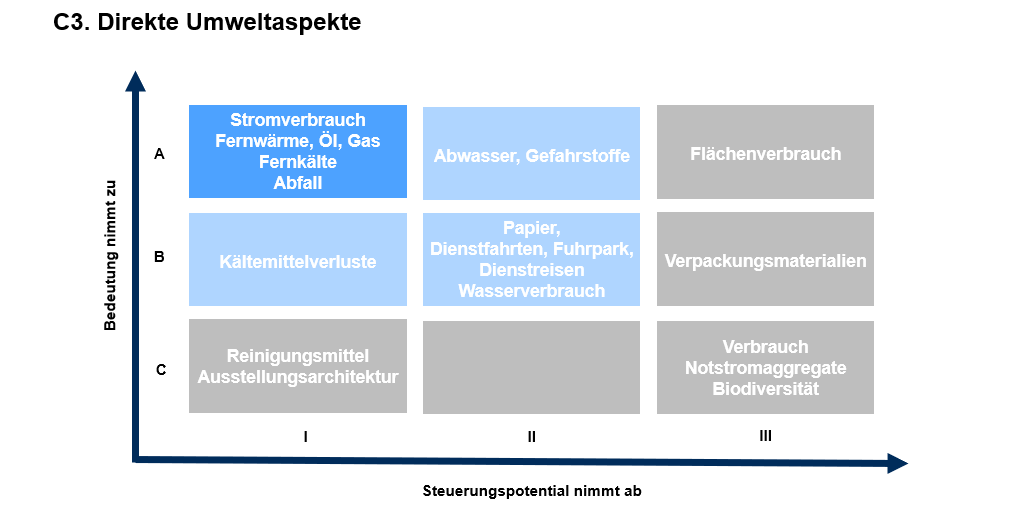
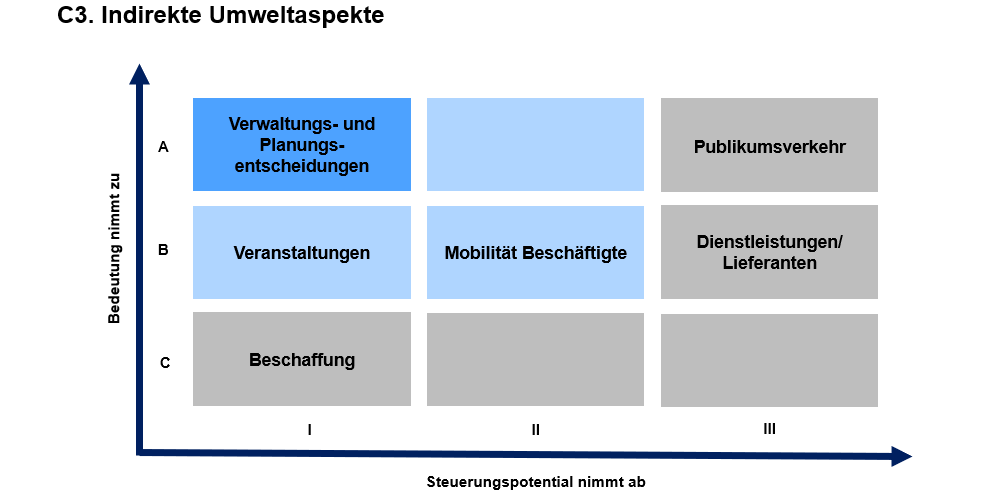
Im 1. Schritt erfolgte eine Bewertung der Umweltrelevanz anhand der Kriterien „quantitative Bedeutung, prognostizierte zukünftige Entwicklung und Gefährdungspotenzial für die Umwelt“. Nach der Einstufung der Umweltaspekte in die Kategorien A, B oder C wurden die Umweltaspekte hinsichtlich der Beeinflussbarkeit den Stufen I bis III zugeordnet.
Umweltmanagementsystem
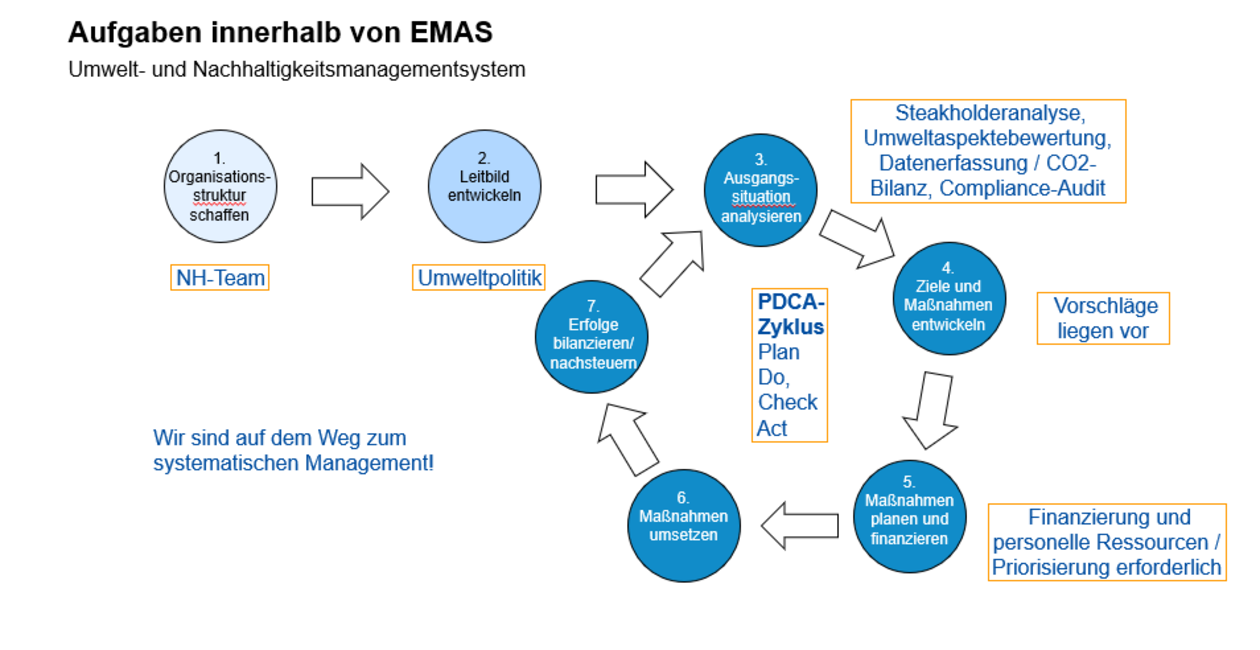
Die Stiftung führt ein Umweltmanagementsystem ein. Damit verpflichtet sie sich, ihre Umweltleistung kontinuierlich zu verbessern, Ressourcen verantwortungsvoll einzusetzen und Transparenz über ihre Umweltziele und -maßnahmen zu schaffen.
PDCA-Kreislauf: Ziele und Maßnahmen
Der kontinuierliche Verbesserungsprozess basiert auf dem PDCA-Kreislauf (Plan-Do-Check-Act). Um stets nachhaltig zu handeln werden konkrete Ziele gesetzt, Maßnahmen geplant, deren Wirkung überprüft und die Strategien entsprechend angepasst.
3. Measures
Various measures are being implemented to achieve concrete changes in different areas of the foundation. These include initiatives to conserve resources, save energy, and promote a shared awareness of sustainability. Some of the most important measures are presented below:
Materials exchange
A materials exchange promotes the reuse of materials within the foundation. Employees can exchange or reuse unused resources to avoid waste and extend the life of materials.
Energy saving
Energy-efficient technologies are used to optimize energy consumption in the foundation's buildings. In addition, employees are made aware of the importance of using energy responsibly. Large SPK properties such as the State Library and the museums at the Kulturforum have been and are being optimized for energy efficiency by external partners as part of an energy-saving contract. This has resulted in significant savings in recent years. Energy savings lead to lower operating costs, reduced resource consumption for energy production, and a lower carbon footprint for the foundation.
Sustainability Action Days
Action days and special events raise awareness of the issue of sustainability. These events provide an opportunity to exchange ideas with colleagues, develop new ideas, and implement practical tips for promoting sustainability in everyday life.
4. Results & Successes
PV systems
In order to improve the environmental balance of buildings and promote the production of green electricity close to the buildings, photovoltaic systems are being planned as part of construction projects, including at the “berlin modern” and Berggruen museums, the Gripsformerei, and the Potsdamer Straße building of the State Library.
Photovoltaic modules are also planned for the glass roof of the south wing and the roof of the fourth wing of the Pergamon Museum. This is expected to offset ten percent of the total electricity consumption. The photovoltaic modules, which will be integrated into the glazed roof structure above the halls of the Museum of the Ancient Near East, will also protect the light-sensitive exhibits. The use of specially developed insulating glazing will ensure that the color of the roof surface remains as close as possible to that of the neighboring glass roofs, which have not yet been equipped with PV systems. The requirements of the German Federal Government's Energy Efficiency Regulations (EEFB) 2021 are met. The target value for existing buildings, Efficiency Building Federal 55 (EGB 55), is achieved. In the area of the new fourth wing, the new building target value Efficiency Building Federal 40 (EGB 40) is also guaranteed.
5. Actions taken by the working groups – best practices
Our teams and working groups
Sustainability is teamwork – that is why the Prussian Cultural Heritage Foundation relies on the active participation of its employees.
Colleagues are involved in various working groups (AGs) dedicated to specific sustainability projects. Whether it's “green mobility,” “sustainable food and drink,” or the ecological enhancement of outdoor spaces, each AG focuses on its own area of expertise. The working groups have developed numerous best practices that serve as models for sustainable action.
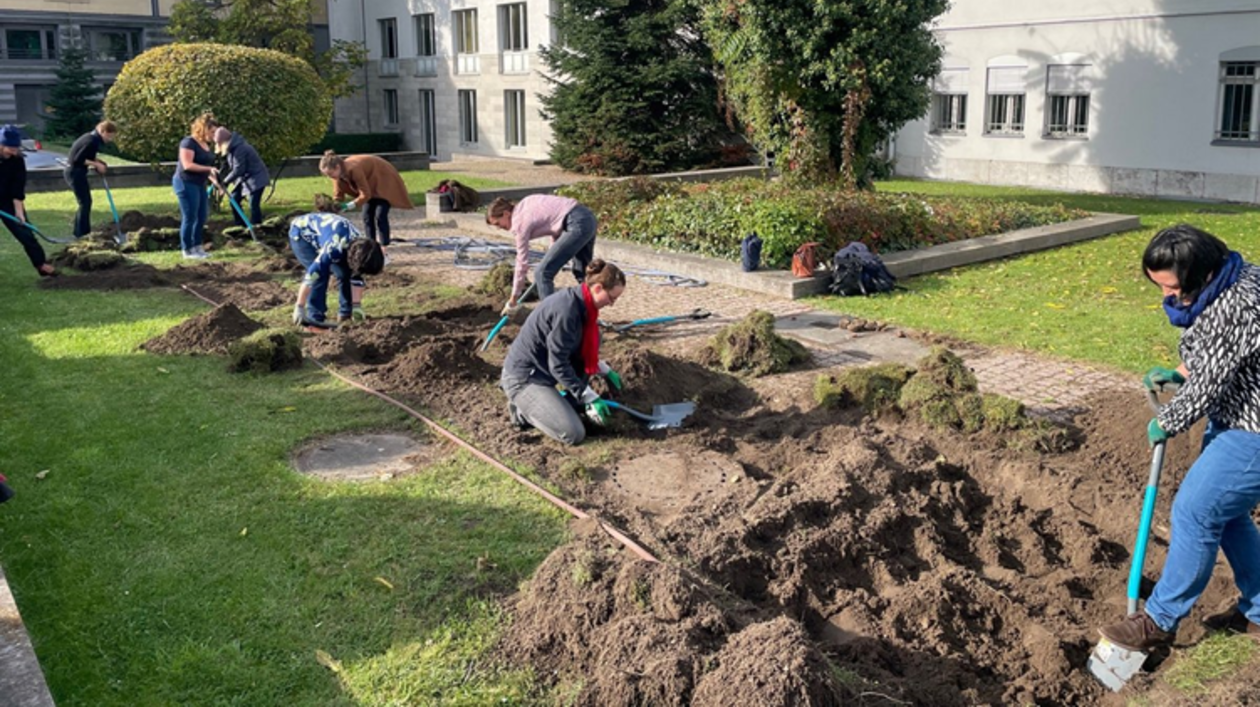
Greening Up Working Group
The aim of this working group is to make SPK greener by planting flowers, creating wildflower meadows, and using insect-friendly plants. Employees can actively participate in planting activities and planning.
Green Mobility Working Group
This group works on sustainable mobility solutions, such as improving bicycle infrastructure and using electric cars and cargo bikes for internal transport. The goal is to reduce the ecological footprint of passenger transport.
Sustainable Food and Drink Working Group
The working group promotes the use of regional and seasonal products in SPK canteens and focuses on sustainable catering concepts. Environmentally friendly catering solutions are also sought for events.
Resource-efficient working working group
Focuses on potential savings in everyday office life, such as the responsible use of paper and the sustainable use of IT equipment. The aim is to continuously optimize resource use within the foundation.
SBB Sustainability Working Group
This working group is developing a long-term sustainability strategy for the State Library and coordinating projects to conserve resources and raise awareness among employees.
Would you like to get involved in one of the working groups? Visit the respective subpages to find out more about the goals and opportunities for participation. We look forward to your ideas and support!
6. Symposium „Grüne Inventur“
Cultural Institutions in Transition: From Carbon Footprint to Sustainable Transformation
January 2026
As part of the “Green Inventory” project, the Prussian Cultural Heritage Foundation hosted an online symposium on January 27, 2026, focusing on the sustainable transformation of cultural institutions.
The symposium focused on expanding the foundation’s carbon footprint assessment, the energy sector, and strategic and organizational issues related to sustainable development.
The final report on the symposium is available for download in German here:
Further links
Contact
Our sustainability officers are available to answer any questions you may have. You can reach us by email at: nachhaltigkeitspk(at)spk-berlin(dot)de.
Sustainability Toolkit
The SPK is leading the way: our tried-and-tested checklists set standards that other organisations can adopt directly. As ‘living documents’, they are continuously updated.
- Exhibitions Checklist (PDF, as at 27 June 2025)
- Acquisition Checklist (PDF, as of 26 June 2025)
- Art Transport Checklist (PDF, as of 15 July 2025)
- Events Checklist (PDF, as at 14 July 2025)