

New publication on provenance research into human remains from West Africa
News from 04/22/2026
Almost 600 skulls from the former German colonies in West Africa were examined as part of a joint research project with partners from Togo and Cameroon. The recently published report documents the findings and lays the groundwork for the potential repatriation of the human remains.
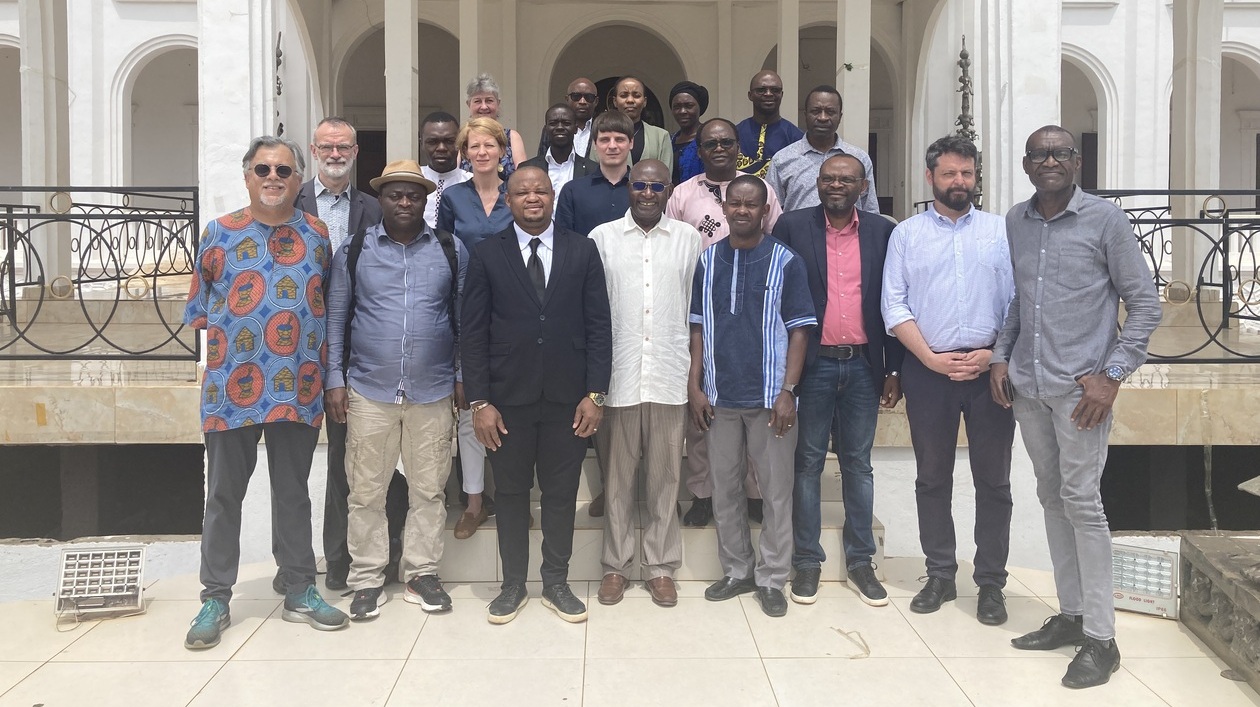
The Museum of Prehistory and Early History, part of the Berlin State Museums, has collaborated with researchers from Togo and Cameroon to investigate the provenance of nearly 600 skulls from the former German colonies in West Africa. The findings of the project, which began in 2021 and was funded by the Federal Government Commissioner for Culture and the Media, are now available in a publication. *Restes Humains Provenant Des Anciennes Colonies Allemandes D’Afrique De L’Ouest. Recontextualisation Et Approches De La Restitution* forms the basis for the responsible repatriation of human remains to their countries of origin.
Minister of State for Culture and Media Wolfram Weimer says: “Provenance research and the repatriation of human remains are, for me, central concerns in coming to terms with colonialism. The SPK project on the research into human remains from West Africa is a flagship project that sets standards in direct exchange and trusting cooperation with the societies of origin. The fact that German representatives travelled to the communities concerned to share findings and discuss possible repatriations was received with deep appreciation on the ground and has impressively demonstrated the existential significance that the return of ancestors holds for local people and for reconciliation. My special thanks go to the representatives from Togo and Cameroon, who have contributed to this project with great dedication and expertise.”
Marion Ackermann, President of the Stiftung Preußischer Kulturbesitz, explains: “Researching the origins of these skulls is not merely an obligation for us, but a central concern. Wherever possible, the human remains should be able to return to where they came from. That is why we have communicated the research findings and our openness to repatriation to the countries of origin. With this publication now available, the findings and the scientific approach are also accessible to the general public.”
The volume sheds light on the history of anthropological research, reconstructs colonial contexts and documents the provenance of the remains examined. Of the 574 skulls, 336 could be attributed to regions in present-day Cameroon, 151 to present-day Togo, 23 to Ghana and one to Nigeria; for 63, no more precise identification was possible.
The specimens examined form part of the historical anthropological collection of around 7,700 skulls that the Prussian Cultural Heritage Foundation acquired from the Charité in 2011. Following the previously published findings on German East Africa, this represents a further step in the scientific reappraisal and in dialogue with the societies of origin.
Further links
- Press release: Results of provenance research on skulls from West Africa published (22 April 2026)
- Publication: Human remains from the former German colonies in West Africa
- Article: “Provenance research across borders” (2 March 2023)
- Article: “To give something back, you need to know where it comes from” (18 August 2017)